
Our Products

Electron Source
The electron source is the core head-end component of a particle accelerator; its essential function is to generate and emit a high-quality electron beam. It typically consists of a cathode, an anode, focusing electrodes, and high-voltage insulation structures, operating on thermionic or field-emission principles. Its performance directly determines the overall beam quality of the accelerator. Key metrics include emission current density, beam emittance, energy spread, and long-term operational stability. A high-quality electron source must deliver a beam of high brightness, low emittance, and excellent reproducibility—the essential prerequisite for subsequent acceleration, focusing, and high-efficiency applications such as free-electron lasers, synchrotron radiation, or industrial irradiation.
We provide electron beams with energies of 1 keV–200 keV, beam currents of 1 nA–15 mA, and spot sizes of 1 mm–50 mm, with an optional scanning system that achieves uniform scanning over a 1000 mm × 1000 mm area.
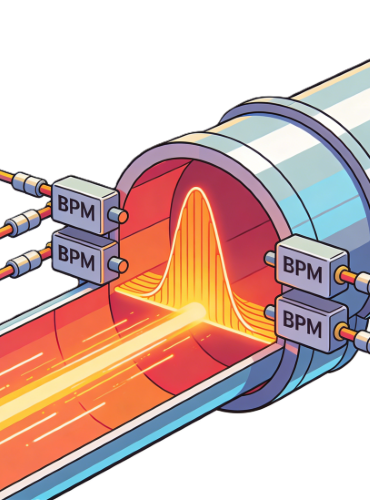
Beam Diagnostic Probes
The beam diagnostics system is the sensory organ of a particle accelerator. Its core function is to measure—in real time, non-destructively or with minimal perturbation—key parameters such as beam intensity, position, profile, size, emittance, and energy spread, providing indispensable data for precision tuning, stable operation, and performance optimization. The system comprises a variety of non-interceptive and interceptive probes: beam current transformers (BCT) and wall-current monitors measure current and time structure; beam position monitors (BPM) track the beam trajectory; wire scanners and fluorescent screens capture transverse profiles; synchrotron-light and diffraction-radiation monitors enable non-interceptive observation; spectrometers measure energy; and slit or pepper-pot devices measure emittance. Together these detectors provide a comprehensive health check of the beam.
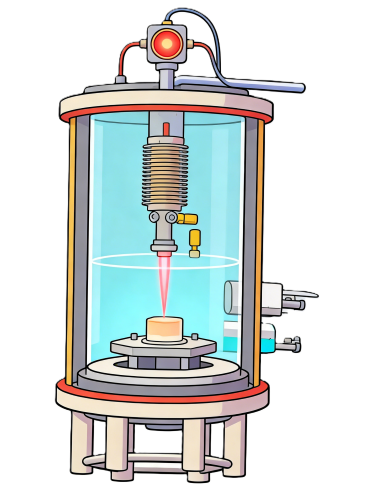
Irradiation Systems
The irradiation characterization system is a key test platform for precisely evaluating the overall performance of chips, circuit boards, and equipment under radiation environments. By accurately simulating the space radiation environment, it enables in-situ, online characterization of core components. Core capabilities include: precisely measuring the evolution of key electrical parameters of devices and equipment versus flux and time in a controlled vacuum environment; simultaneously monitoring radiation damage effects in materials, such as lattice defect formation and electrical degradation; and integrating thermal management evaluation modules to analyze irradiation heating and thermoelectric coupling effects.